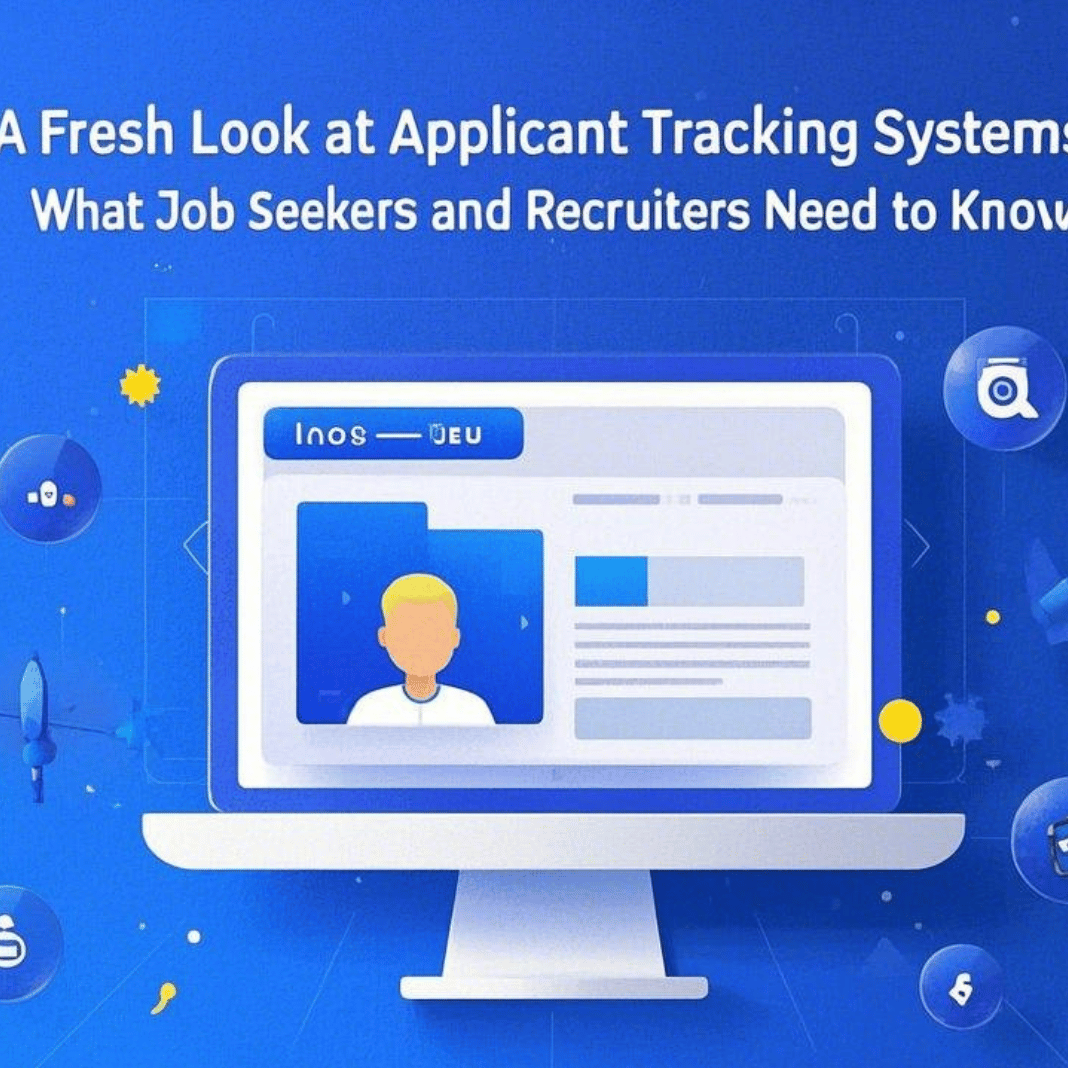
An applicant tracking system (ATS) is software employers use to post jobs, collect applications, store candidate data and move people through each hiring stage, from screening to offer. For recruiters, it replaces inboxes and spreadsheets with one searchable pipeline. For job seekers, it means your resume is first read by software that parses it into fields and lets recruiters search and filter by skills, titles and keywords. Most ATS platforms do not automatically “reject” resumes on their own; recruiters set the filters and knockout questions, and humans still make the decisions. Knowing how that works helps both sides.
What an applicant tracking system actually does
If you are asking what is applicant tracking system software, the simplest answer is that it is a hiring database with workflow tools built around it. Typical features include:
- Job posting: publishing openings to the careers page and job boards from one place.
- Resume parsing: extracting names, contact details, job titles, dates, education and skills into structured fields.
- Screening questions: “knockout” questions such as work authorization, required licenses or willingness to relocate.
- Search and ranking: keyword search across all past and current applicants, sometimes with AI-based match scores.
- Pipeline management: moving candidates through stages, scheduling interviews and collecting interviewer scorecards.
- Communication: templated emails, status updates and offer letters.
- Reporting and compliance: time-to-hire, source of hire, diversity reporting and record keeping.
Well-known platforms include Greenhouse, Lever, Workday Recruiting, iCIMS, SmartRecruiters and, for smaller firms, tools such as BambooHR or Workable. Features vary, but the basic flow is similar across them.
How an application moves through an ATS
- You apply on a careers page or job board and upload a resume.
- The system parses your file into a candidate profile. Poor formatting can scramble this step.
- Knockout questions may disqualify you automatically if you answer outside a required criterion, such as lacking a required license.
- A recruiter reviews the applicant list, often sorted by date, match score or keyword search.
- Shortlisted candidates move to phone screens and interviews, with feedback logged in the system.
- Offer and onboarding data may pass into HR and payroll systems.
ATS myths versus reality
| Myth | Reality |
|---|---|
| Most resumes are rejected by robots before a human sees them | This figure is widely repeated without solid evidence. Automatic rejection usually comes from knockout questions set by the employer, not from the ATS reading your resume. |
| You need a special “ATS resume template” | A clean, single-column document with standard headings works in almost every system. |
| Stuffing keywords or hiding white text beats the system | Recruiters read what the ATS shows them. Keyword stuffing looks obvious and can hurt you. |
| PDFs cannot be read | Most modern systems parse text-based PDFs well. Scanned images and heavily designed PDFs are the problem. |
| Applying early does not matter | Some recruiters review in date order and close the role once they have a strong shortlist, so applying promptly can help. |
What job seekers need to know
Format for clean parsing
- Use a simple single-column layout. Avoid tables, text boxes and graphics for key information.
- Use standard section headings: Experience, Education, Skills, Certifications.
- Put contact details in the body, not in the header or footer, which some parsers skip.
- Use common fonts and a .docx or text-based PDF unless the posting asks for something else.
- Write dates consistently (for example, “Mar 2022 to Present”).
Match the language of the job posting
Recruiters search the ATS using terms from their own job description. If the posting says “customer success” and your resume says “client care,” you might not appear in their search. Mirror exact skill names, tools and certifications where they honestly apply, and include both the acronym and full form when relevant, such as “search engine optimization (SEO)”. Put your strongest matching skills in the top third of the page and show them in context with results, not only in a skills list.
Answer screening questions carefully
Knockout questions are the most common reason a qualified person is filtered out. Read each one, answer truthfully, and fill in optional fields such as salary expectations or start dates thoughtfully. Where a referral is possible, ask the referrer to submit you through the ATS so the recruiter sees the connection.
What recruiters and employers need to know
Choosing an ATS
| Consideration | Questions to ask |
|---|---|
| Company size and volume | How many roles and applicants per year? Does pricing scale per seat, per job or per employee? |
| Integrations | Does it connect to your HRIS, payroll, calendar, job boards and background check providers? |
| Candidate experience | Is the application mobile-friendly and short? Can candidates apply without creating an account? |
| AI features | How are match scores produced, and can you explain or audit them? |
| Reporting | Can you track time-to-hire, pipeline drop-off and source quality? |
| Data security | Where is candidate data stored, and how long is it retained? |
Common implementation challenges
- Too many knockout questions that screen out good people for minor reasons.
- Long applications that make candidates retype their whole resume and abandon the form.
- Poor adoption when hiring managers keep feedback in email rather than the system.
- Silence toward candidates, which damages employer reputation. Automated but friendly status updates are easy to set up.
An ATS also fits into broader workforce planning. When internal recruiting cannot keep up, some companies bring in outside help, a choice covered in our guides to team augmentation services and to outsourcing manpower services.
Hiring metrics an ATS makes visible
One of the biggest benefits of an ATS is data that was hard to collect by hand. The metrics most teams watch are:
- Time to fill and time to hire: days from opening a role, or from a candidate applying, to an accepted offer.
- Source of hire: which job boards, referrals or campaigns produce people who are actually hired, not just applicants.
- Stage conversion: where candidates drop out, such as a long assessment or slow interview scheduling.
- Offer acceptance rate: a low rate often points to pay, process speed or candidate experience problems.
- Application completion rate: how many people start the form but never submit it.
Reviewing these monthly helps a team spend its advertising budget on the channels that work and fix the stages that lose good candidates.
A quick checklist for candidates before you click apply
- Save the job posting, since it may disappear from the site once the role closes.
- Adjust your summary and top bullet points to reflect the posting’s main requirements.
- Check the file name is professional, such as “Firstname-Lastname-Resume”.
- Preview how the parsed profile looks if the system shows you, and correct any fields it got wrong.
- Keep a log of where you applied, the date and the login details for each careers portal.
Human judgment versus automation
Automation is good at organizing volume: sorting, scheduling and reminding. It is weaker at judging potential, transferable skills and fit for a team. Career changers, returners after a gap and people with unusual job titles can easily be missed by rigid keyword searches. The best-run hiring teams use the ATS to make sure no application gets lost, then rely on structured interviews and consistent scorecards for decisions.
AI in applicant tracking and the rules around it
Many ATS vendors now add AI features: match scores, resume summaries, chatbot scheduling and suggested interview questions. These can save time, but they raise fairness questions if a model learns from past hiring patterns. Regulation is starting to catch up. New York City’s Local Law 144, for example, requires employers using automated employment decision tools for NYC roles to commission a bias audit and notify candidates. Other states have passed or proposed rules on AI in hiring, and existing anti-discrimination laws still apply regardless of whether a person or a tool made the decision. Employers should document how AI features are used and keep a human in the loop.
Once a candidate is hired, ATS data often feeds payroll and HR systems, so the accuracy of offer details matters; see our explainer on payroll tax for U.S. employers for what happens next on the employer side.
Frequently asked questions
Does an ATS automatically reject resumes?
Usually not on its own. Automatic rejections mostly come from knockout questions the employer sets. Otherwise, recruiters search, sort and review applicants themselves.
Can an ATS read a PDF resume?
Most modern systems parse text-based PDFs well. Problems come from scanned images, multi-column designs, tables and text boxes.
How do I make my resume ATS-friendly?
Use a simple single-column layout, standard headings, contact details in the body, and the same skill terms the job posting uses where they honestly apply.
Which companies use applicant tracking systems?
Most large employers and many small and midsize businesses use one. Common platforms include Greenhouse, Lever, Workday, iCIMS and SmartRecruiters.
Are AI hiring tools regulated?
Increasingly. New York City requires bias audits and candidate notices for automated employment decision tools, and anti-discrimination laws apply to AI-assisted decisions everywhere.