
Introduction: Your First Moves After a Car Accident in Massachusetts
The sudden jolt of a car accident can turn your day upside down. It’s a moment of shock, confusion, and sometimes fear. But knowing what to do next is vital. These steps can protect your safety, your rights, and your finances.
We understand how overwhelming this can be. That is why we have put together this guide. It will walk you through the critical actions to take. We will cover everything from the immediate aftermath at the scene to working with insurance companies. We will also explain your legal options. Our goal is to help you manage the situation with confidence and clarity.
When a car accident occurs, the immediate aftermath can be disorienting. However, your actions in the first few minutes and hours are crucial. They can significantly impact your safety, the outcome of any insurance claims, and your legal standing. Remaining calm and following a structured approach can make all the difference.
First and foremost, your safety and the safety of others involved must be the top priority. Assess the situation quickly. Are you or your passengers injured? Is anyone in the other vehicle hurt? Even if you feel fine, shock can mask injuries, so check thoroughly. If anyone appears to be seriously injured, or if you are unsure, call 911 immediately. Do not attempt to move anyone who is seriously hurt unless they are in immediate danger, such as from a fire.
Once you’ve addressed immediate safety and potential injuries, evaluate your vehicle’s position. If the accident is minor and your vehicle is drivable, and it is safe to do so, move it to the side of the road or a nearby safe location, out of the flow of traffic. This helps prevent further accidents and keeps you safe from oncoming vehicles. Turn on your hazard lights to alert other drivers. If your vehicle is not drivable, or if moving it would endanger anyone, leave it in place and ensure everyone moves to a safe spot away from the road. These initial steps are the foundation for managing the situation effectively.
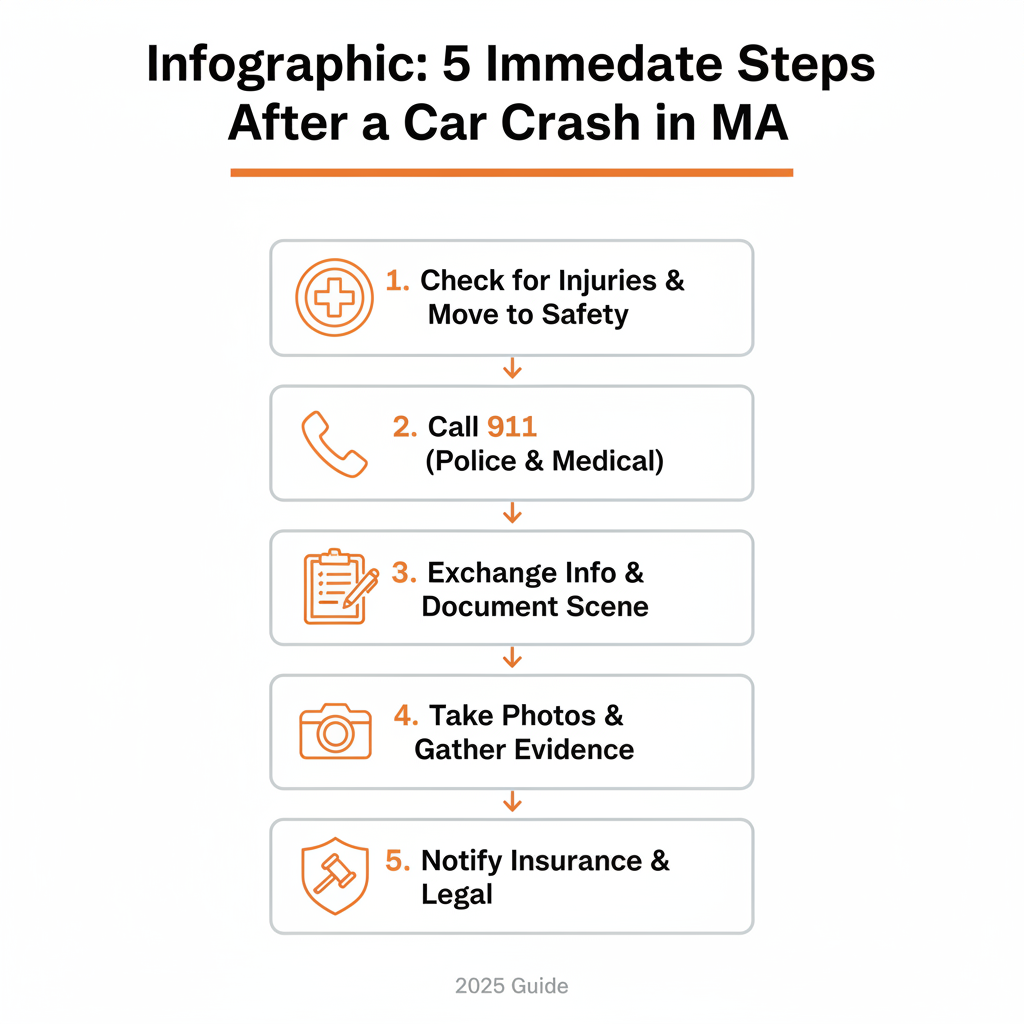
At the Scene: Key Steps to Take After an Accident
This section covers the crucial on-site actions required in Massachusetts, from gathering evidence to fulfilling your legal reporting duties.
Your Guide to Documentation After an Accident
Thorough documentation at the accident scene is one of the most critical steps you can take. The information you collect will be invaluable for your insurance claim and any potential legal proceedings. Begin by exchanging information with all other drivers involved. This should include their full name, contact information (phone number and address), driver’s license number, license plate number, and insurance company details (company name and policy number). It’s also wise to note the make, model, and year of their vehicle. If there are passengers in any vehicle, try to get their names and contact information as well, as they may be witnesses.
Witnesses are an often-overlooked but vital source of information. If anyone stopped to observe the accident, politely ask for their name and contact number. Independent witnesses can provide an unbiased account of what happened, which can be extremely helpful if there are disputes about fault later on. Their perspective can corroborate your story or shed light on details you might have missed in the confusion.
Photo and video documentation are powerful tools. Most smartphones today have excellent cameras, and you should use yours extensively. Take pictures of the damage to all vehicles involved from multiple angles. Capture close-ups of specific points of impact, as well as wider shots that show the overall damage and the relative positions of the vehicles. Don’t forget to photograph any debris on the road, skid marks, and relevant road signs or traffic signals. Also, take pictures of the general accident scene, including the surrounding environment, road conditions, weather, and any landmarks that can help pinpoint the exact location. If you or anyone else sustained visible injuries, document those with photos as well.

Finally, take detailed notes. While the events are fresh in your mind, jot down the date, time, and exact location of the accident. Describe the weather conditions, road conditions, and visibility. Write down your version of how the accident occurred, including the sequence of events leading up to and immediately after the collision. Note any statements made by other drivers or witnesses. This meticulous record-keeping will serve as a reliable reference when you communicate with your insurance company or legal counsel, helping to ensure accuracy and completeness in your account.
Reporting the Crash: Massachusetts Rules and Procedures
Understanding when and how to involve the police is paramount after a car accident in Massachusetts. While not every fender-bender requires police presence, certain conditions mandate their involvement. You should always call 911 if there are any injuries, regardless of how minor they may seem, or if there is a fatality. Police intervention ensures that medical assistance is dispatched promptly and that an official report is filed, which is critical for both insurance and legal purposes.
In Massachusetts, there’s a specific threshold for property damage that triggers a mandatory police report. If the estimated damage to any one vehicle or property involved in the accident exceeds $1,000, you are legally required to notify the police. Even if the damage appears minor, it’s often difficult to accurately assess the full extent of damage at the scene, and repair costs can quickly escalate beyond this threshold. When in doubt, it’s safer to call the police. They will assess the scene, gather information, and determine if an official report is necessary.
Beyond calling the police to the scene, Massachusetts law also requires drivers to file a crash report with the Registrar of Motor Vehicles within five days if the crash resulted in personal injury, death, or property damage exceeding $1,000. A copy must also be sent to the police department with jurisdiction where the accident occurred. This 5-day rule is crucial, and failing to comply can have legal consequences. The police report is a vital document; it provides an official, unbiased account of the accident, which can expedite your insurance claim and help establish fault. Local police departments in areas like Newton, Wellesley, and Natick are well-versed in these procedures and can guide you through the process.
A critical piece of advice when dealing with the police and other drivers at the scene is to never admit fault. Even if you believe you were responsible, liability is a complex legal determination that should be left to insurance adjusters and, if necessary, legal professionals. Stick to the facts, describe what happened without speculating, and avoid apologizing or making statements that could be construed as an admission of guilt. Your primary role is to cooperate with the police, provide accurate information, and ensure your safety and the safety of others.
The Aftermath: Navigating Insurance and Legal Pathways
Once you have left the scene, the next phase involves dealing with insurance companies and understanding your legal standing.
Filing Your Insurance Claim After an Accident
After ensuring your immediate safety and gathering all necessary information at the scene, the next crucial step is to notify your insurance provider. We recommend doing this as soon as possible, ideally within 24 hours of the accident. Prompt notification helps kickstart the claims process and demonstrates your cooperation, which can be beneficial. Even if you’re unsure who was at fault or if the damage seems minimal, it’s always best to inform your insurer. They can guide you through the specific steps required by your policy.
The claim-filing process typically begins with a phone call to your agent or the insurance company’s claims department, or through their online portal or mobile app. You will be asked to provide details about the accident, including the date, time, location, parties involved, and a description of what occurred. Your insurer will then assign a claims adjuster to your case. This adjuster will be your primary point of contact and will investigate the accident to determine liability and the extent of damages.
When communicating with the insurance adjuster, it’s important to stick to the facts you gathered at the scene. Avoid speculating, exaggerating, or minimizing details. Answer their questions honestly but concisely. Common questions may include: “What happened?” “Where were you going?” “Who was in your car?” “Did you sustain any injuries?”, and “What kind of damage did your vehicle suffer?” The adjuster’s role is to assess the claim based on policy terms and factual evidence. For comprehensive guidance on navigating these complexities and understanding your coverage options, we encourage you to explore the Kovalev accident expertise available on our website.
Regarding vehicle repair options, your insurance company may recommend specific repair shops within its network. However, in Massachusetts, you generally have the right to choose your own repair facility. If you have a preferred body shop, you can usually take your vehicle there for an estimate. For minor damage, the insurer might ask for multiple repair estimates. If your vehicle is deemed a “total loss” (meaning the cost of repairs exceeds a certain percentage of its actual cash value), the insurance company will offer a settlement based on the vehicle’s actual cash value (ACV) just before the accident. This can be a point of contention, and understanding how ACV is calculated is important. Additionally, check your policy for rental car coverage; if you have it, your insurer will cover the cost of a rental vehicle while yours is being repaired or replaced, up to your policy limits.
Understanding Your Legal Rights and Options
Beyond the immediate aftermath and insurance claims, understand your legal rights and options following a car accident. Protecting these rights can be crucial, especially if injuries are involved, if there’s a dispute over fault, or if the other party’s insurance company is uncooperative. The other driver’s insurance company does not represent your interests; their primary goal is to minimize their payout. Therefore, exercise caution when communicating with them. It’s often advisable to direct all communications through your own insurer or legal representative.
Knowing when to hire a lawyer is a significant decision. While not every accident requires legal intervention, a personal injury attorney can be invaluable in specific situations. If you’ve sustained injuries, even seemingly minor ones, a lawyer can help you steer bodily injury claims, ensuring you receive fair compensation for medical expenses, lost wages, pain, and suffering. They can also assist if there are complex disputes over property damage, if the other driver is uninsured or underinsured, or if liability is contested. An attorney can act as a buffer between you and aggressive insurance adjusters, protecting you from inadvertently saying something that could harm your claim. For those seeking assistance with complex legal matters, including accident and negligence cases, a legal professional can provide crucial support.
Bodily injury claims are often more intricate than property damage claims. They require thorough documentation of medical treatment, diagnoses, prognoses, and the impact of injuries on your daily life and earning capacity. A lawyer can help gather this evidence, including medical records, bills, and expert testimonies, to build a strong case. They can also negotiate with insurance companies on your behalf, aiming for a settlement that adequately covers your current and future needs. If a fair settlement cannot be reached, they can represent you in court.
Property damage disputes can arise if you disagree with the insurer’s assessment of repair costs or the total loss valuation of your vehicle. A lawyer can help you challenge these valuations, ensuring you receive fair market value for your vehicle or adequate funds for quality repairs. It’s also important to be aware of the statute of limitations in Massachusetts, which sets a deadline for filing a lawsuit after an accident. Missing this deadline can forfeit your right to pursue compensation. Whether you’re in Brookline, Needham, or Belmont, these legal principles apply, and understanding them is key to safeguarding your interests.
Apart from that, if you want to know more about Why You Should Always Hire a Personal Injury Lawyer After an Accident then visit our Insurance category.