Muffin boxes are small, food-safe cardboard or kraft containers designed to hold one or more muffins securely, often with a window or insert so the bakes stay upright and look appealing. For celebrations, they turn a simple treat into a gift; for bakeries, they protect the product, carry the brand and make every sale feel special.
Sharing food is one of the oldest ways people mark happiness. Birthdays, office milestones, baby showers, weddings and holidays almost always involve something sweet, and muffins and cupcakes are among the easiest treats to hand out. The packaging is what makes them portable, giftable and memorable. This guide covers why muffin packaging matters, which materials and styles work best, how to design boxes that sell and what to check before ordering in bulk.
Why Sweets and Celebrations Go Together
Think about the last party you went to. Chances are there was a tray of baked goods somewhere near the center of the room. Individually portioned treats like muffins work well because guests can grab one without cutting, plating or sharing utensils. They are also easy to take home, which is where a good box comes in.
Serving muffins at parties and events has become a popular trend, and hosts increasingly care about how the treats are presented. Decorative Muffin Boxes let a host match packaging to a theme, add a name or message and give guests a neat favor to carry away. A plain muffin becomes part of the occasion rather than an afterthought.
What Makes a Good Muffin Box
Muffins are softer and more delicate than they look. Domed tops crush easily, frosted varieties smudge, and moisture from fresh bakes can weaken thin packaging. A good box solves all of these problems at once.
- Sturdy board: The walls should be rigid enough that a stack of boxes does not collapse the ones underneath.
- Inserts: Cardboard inserts with cut-out holes keep each muffin in place, which matters most for packs of two, four, six or twelve.
- Food-safe surfaces: Inner surfaces or liners should be suitable for direct food contact, or the muffins should sit in paper cases.
- Enough height: Leave room above the muffin top so frosting and toppings are not flattened by the lid.
- Ventilation or grease resistance: Warm or buttery bakes can mark plain board, so coated or grease-resistant stock helps the box look clean.
Choosing the Right Material
The two most common materials for muffin packaging are paperboard (often called cardboard) and kraft board. Corrugated board comes into play when boxes need to survive longer journeys. Each has a clear use case.
| Material | Best for | Strengths | Watch out for |
|---|---|---|---|
| Paperboard / cardboard | Local bakery sales, party favors, retail display | Smooth surface for vivid printing, light, affordable | Less crush resistance over long distances |
| Kraft board | Eco-focused brands, rustic or natural designs, shipping | Recyclable, strong for its weight, natural look | Brown base mutes bright colors unless printed with white ink |
| Corrugated board | Shipping to other regions, bulk orders, mail-order bakeries | Best protection against crushing and impact | Bulkier and less elegant as a gift box |
For deliveries within your own town, printed paperboard is usually enough. If you are sending boxes to other regions, kraft or corrugated stock gives more protection, and kraft has the added benefit of being widely recyclable.
Popular Muffin Box Styles
Window Boxes
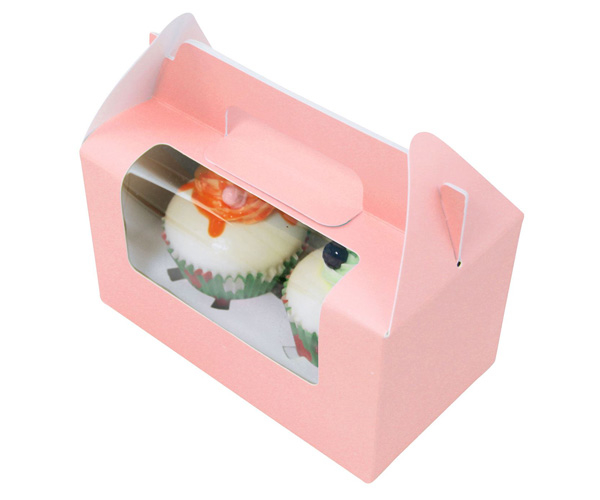
A clear window on the lid or front lets customers see the product before buying. It is ideal for bakery counters and farmers’ markets, where appearance drives impulse sales.
Single-Serve Boxes
Small boxes that hold one muffin work well as party favors, wedding gifts and coffee-shop grab-and-go items. They are also suitable for macarons and cupcakes.
Multi-Pack Boxes with Inserts
Boxes for two, four, six or twelve muffins with an internal insert are the standard for takeout orders and catering. The insert stops the muffins from sliding into each other during transport.
Gable and Handle Boxes
Boxes with a built-in handle are easy to carry and look festive, which makes them popular for holiday gifts and children’s parties.
Keeping Shipping Costs Under Control
Couriers and freight services charge by weight and, often, by size. Lightweight paperboard and kraft boxes keep each shipment light, which helps control delivery costs when you send large quantities. Flat-packed boxes that are assembled on site also take up far less space in storage and in transit.
Before committing to a style, test a sample: pack it, shake it gently, stack a few and leave them for an hour. If the muffins stay intact and the boxes keep their shape, you are on the right track.
Eco-Friendly Packaging and Why It Matters
More customers now pay attention to what happens to packaging after they open it. Choosing recyclable kraft or paperboard, avoiding unnecessary plastic and printing a simple recycling note on the box all show that your business takes waste seriously.
Using recycled board reduces the demand for new paper fiber, and recyclable packaging keeps more material out of landfill. For a bakery or event business, this is both a responsible choice and a selling point that customers notice. If you advertise your packaging as eco-friendly, make sure the claim is accurate for the exact materials, coatings and windows you use.
Designing Boxes That Sell
Shoppers are drawn to shelves with distinctive colors and clean, confident branding. The same rule applies on a bakery counter. Your box is often the first thing a customer sees and the last thing they throw away, so it should be instantly recognizable.
- Put your logo where it is visible when boxes are stacked.
- Use a color palette that matches your shop and social media.
- Add useful details such as flavor, allergens or a best-before space.
- Include a website, handle or QR code for repeat orders.
- Keep the design simple enough that it reads well from a few feet away.
Matte, Gloss or Something Special?
Finishes change how a box looks and feels. A matte coating gives a soft, understated look that suits premium gifts and adult celebrations. A gloss coating adds shine and makes colors pop, which works well for birthdays and surprise parties, and it can make extra gift wrap unnecessary. Add-ons like embossing (raised logos) and spot UV (glossy highlights on selected areas) create a high-end feel for special collections.
| Finish | Look and feel | Good for |
|---|---|---|
| Matte | Soft, elegant, low glare | Corporate gifts, weddings, premium brands |
| Gloss | Shiny, vibrant colors | Birthdays, kids’ parties, bright branding |
| Embossing | Raised, tactile logo or pattern | Signature lines, luxury gift boxes |
| Spot UV | Glossy accents on a matte base | Highlighting a logo or product name |
Checklist Before Ordering Custom Muffin Boxes
- Measure your muffins, including the top, and add clearance.
- Decide how many muffins each box should hold.
- Pick the material based on local sale or shipping.
- Confirm the inside surface or liners are food-safe.
- Request a physical sample or a printed proof.
- Compare unit prices at different order quantities.
- Check lead times well before seasonal peaks or events.
Common Mistakes to Avoid
- Ordering boxes sized for plain muffins, then selling frosted ones that do not fit.
- Skipping inserts on multi-packs and getting damaged deliveries.
- Choosing a dark design that hides important information.
- Ordering a huge first batch before testing customer response.
FAQs
What size box do I need for a standard muffin?
Measure the widest point of the muffin top and its full height, then add a little clearance on every side so the top is not crushed. Standard and jumbo muffins need different sizes, so check both if you bake both.
Are kraft muffin boxes food safe?
Kraft board itself is a paper product, but whether it is safe for direct food contact depends on how it is made and coated. Ask your supplier for confirmation, or place muffins in paper liners inside the box.
Can muffin boxes be used for cupcakes?
Yes, most muffin boxes also fit cupcakes. For frosted cupcakes, choose a taller box and use inserts so the frosting does not touch the lid or sides.
Is a window box worth the extra cost?
For retail and market stalls, a window often pays for itself because customers can see the product. For deliveries and catering, a closed box may be enough and is slightly simpler to produce.
How do I make muffin boxes more eco-friendly?
Choose recyclable kraft or paperboard, limit plastic windows and laminates, use water-based inks where possible and add a recycling message so customers know how to dispose of the box.
Final Thoughts on Muffin Boxes
The right muffin box protects a delicate product, keeps delivery costs sensible and turns a simple bake into something people want to share. Start with the practical choices of size, material and inserts, then build in branding and finishes that suit your occasion or customers. Test samples before ordering in bulk, and your packaging will do as much for your celebrations or sales as the muffins inside.
If you enjoyed this, see our ideas for making jewelry boxes eye-catchy, or explore more guides in our Small Businesses category.