
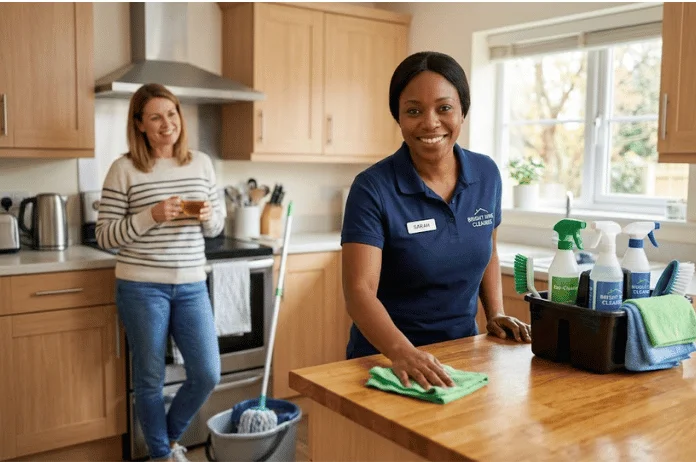
A U.S. cleaning service can start lean, but the legal setup and pricing still matter. Your first goal should not be buying expensive equipment or designing a perfect logo. Focus on one service, legal basics, profitable pricing, and repeat local customers.
Quick answer: If you’re researching how to start a cleaning business, begin with one customer type and a simple service list. If required, register the company, get an EIN, check local licenses, and secure suitable insurance before paid work. Then buy essential supplies, price from your costs, and market locally until repeat bookings create predictable revenue.
Cleaning Service Startup at a Glance
| Decision | Practical starting point |
|---|---|
| Service type | Residential, move-out, rental turnover, or commercial |
| Business structure | Compare sole proprietorship and LLC options |
| Federal tax ID | Apply directly through the IRS when needed |
| Licenses | Check state, county, and city requirements |
| Insurance | Consider general liability before entering client properties |
| Equipment | Start with reliable essentials before specialty machines |
| Pricing | Include labor, supplies, travel, overhead, and profit |
| Marketing | Referrals, Google visibility, local groups, and partnerships |
| Taxes | Track every payment, expense, receipt, and business mile |
Key takeaways
- Start with one narrow service instead of offering every type of cleaning.
- Verify licensing with your state and local government before taking paid jobs.
- Get insurance that matches the work, property exposure, vehicles, and employees.
- Quote jobs from your costs rather than copying the cheapest competitor.
- Build recurring customers before spending heavily on advertising or equipment.
How to Start a Cleaning Business in 10 Steps
- Choose one type of customer first. Residential recurring work can suit a solo owner because equipment needs remain modest. Move-out work offers larger one-time jobs, while offices can provide recurring contracts. Starting with one niche also makes pricing and marketing easier.
- Check demand in your service area. Search local competitors and note their services, reviews, service areas, and booking process. Speak with homeowners, property managers, real estate agents, or office managers about unmet needs. Businve’s start-up resources can also help you compare early-stage business decisions.
- Choose your legal structure and business name. A sole proprietorship is simple, but it does not create a separate legal entity. An LLC can provide personal liability protection in many situations, though state rules and fees differ. The SBA recommends considering taxes, liability, paperwork, and ownership before choosing a structure.
- Register the company and check licensing rules. State registration depends on your location and chosen structure, while local permits can vary by city. Routine janitorial work is generally governed more by state and local rules than federal licensing. Check your Secretary of State, county, and city websites before opening.
If your business needs an Employer Identification Number, apply directly through the IRS. The IRS issues EINs without a fee, so paying a third-party filing service is unnecessary. Keep the confirmation with your permanent business records. - Arrange insurance before taking avoidable risks. General liability coverage can protect against claims involving property damage or injuries connected with your work. Commercial clients may also request proof of coverage before awarding a contract. If you hire employees, check state workers’ compensation rules and workplace safety duties.
Cleaning employees can face chemical, equipment, fall, electrical, and ergonomic hazards. OSHA provides industry guidance to help employers manage these risks. Train workers before assigning chemicals or equipment they have not used safely. - Buy the essential equipment, not every available machine. A residential starter kit usually needs a dependable vacuum, microfiber cloths, mop equipment, brushes, gloves, and suitable cleaning products. Add specialty machines after customer demand proves they can earn back their cost. EPA’s Safer Choice program can also help businesses identify products using safer chemical ingredients.
- Build prices from your actual costs. Estimate labor time first, including setup and cleanup, not just room cleaning. Add supplies, transportation, insurance, payment fees, administration, overhead, and your target profit. You can present the final amount as a flat quote even when your calculation begins with labor hours.
- Separate business money and create tax records immediately. Use a dedicated business account where practical, and record income when customers pay. Save receipts, mileage records, equipment invoices, insurance documents, and contractor or payroll records. Businve’s guide to side jobs and self-employment costs gives useful context for tracking earnings beyond headline revenue.
Self-employed owners may need estimated federal tax payments during the year. The IRS generally requires individuals to consider estimated tax payments when they expect to owe at least $1,000. Use current IRS guidance or a qualified tax professional for your circumstances. - Find the first customers before increasing marketing spending. Ask personal contacts for referrals, create a Google Business Profile, and participate in relevant local groups. Property managers and real estate agents can also generate repeat move-out or turnover work. Businve’s marketing resources can help as your customer acquisition plan becomes more formal.
- Turn good jobs into recurring revenue. Confirm appointments clearly, arrive when promised, and use a consistent checklist for each service. After successful jobs, ask satisfied customers for reviews and referrals without pressuring them. Track repeat-booking rates because a full recurring schedule reduces constant lead hunting.
How Much Money Do You Need to Get Started?

Startup costs depend heavily on equipment, location, service type, registration fees, and marketing choices. Housecall Pro’s 2026 planning guide places many launches between about $500 and $5,000 or more. It estimates equipment alone can range from roughly $200 to $2,000, depending on the setup.
| Startup category | What affects the amount |
|---|---|
| Registration | Entity type and state filing fees |
| Local licenses | City, county, and business activity |
| Equipment | Residential basics versus commercial machines |
| Supplies | Product range, quantities, and specialty work |
| Insurance | Coverage limits, payroll, vehicles, and risk |
| Website and phone | DIY setup versus paid services |
| Marketing | Free referrals versus paid local advertising |
| Cash reserve | Fuel, replacements, payroll, and slow-paying clients |
The SBA says state business registration costs are usually below $300, although actual fees vary. Licensing charges can add more because local governments set many requirements separately. Build your own budget from confirmed local fees rather than copying another owner’s total.
Try to preserve cash until customers show which investments produce revenue. A commercial floor machine makes little sense when every booked job is residential. Businve’s broader small-business resources can help you compare spending and growth decisions.
A Simple Pricing Formula That Protects Your Margin
Underpricing often begins because new owners compare advertised rates without comparing costs. Your quote needs to pay for working time and the hours customers never see. Travel, scheduling, laundry, purchasing supplies, bookkeeping, and quoting still consume business resources.
Use this simple framework.
- Estimated labor time × required labor value.
- Plus cleaning materials and disposable supplies.
- Plus mileage or transportation expense.
- Plus insurance, software, and administrative overhead.
- Plus a profit allowance.
- Equals your minimum sustainable quote.
Test every estimate against the actual time it takes to complete the job. A three-hour estimate that repeatedly needs five hours is a pricing problem. Update the quote template instead of hoping faster work fixes an unrealistic price.
Mistakes That Make a New Service Harder to Grow
Most early problems come from weak business systems, not cleaning technique. Owners often spend too much before confirming demand, then charge too little to recover those costs. Avoiding a few common errors can protect both cash and customer trust.
- Offering every service before mastering one niche.
- Ignoring city or county licensing requirements.
- Working inside customer properties without appropriate insurance.
- Copying competitor prices without calculating costs.
- Buying commercial equipment before you have commercial contracts.
- Mixing personal and business transactions.
- Failing to document job scope before starting.
- Depending on one large customer for most revenue.
- Ignoring reviews after successful jobs.
- Hiring workers without payroll and safety planning.
Frequently Asked Questions
How to start a cleaning business with little money?
Begin with residential work that uses basic equipment you already own or can purchase cheaply. Choose a tight service area so fuel and travel time remain manageable. Reinvest early profit into better equipment only after customers create a clear need.
Do you need a license to provide cleaning services?
Requirements depend on your state, county, city, and the work you perform. The SBA says license and permit requirements vary by business activity and location. Check local government rules before assuming registration alone lets you operate.
Should you form an LLC before getting customers?
An LLC is not automatically the right choice for every owner. It can provide liability separation, while a sole proprietorship requires less formal setup. Compare state costs, tax treatment, liability exposure, and professional advice before deciding.
Can you begin as a one-person operation?
Yes, many local services can begin with the owner completing the work. Starting solo can keep payroll and scheduling simpler while you test demand. Hire only when your recurring workload supports wages, taxes, insurance, supervision, and training.
How do you get your first cleaning clients?
Start with people who already know your work ethic, then ask satisfied customers for referrals. Build local search visibility and form relationships with property managers, landlords, and real estate agents. Respond quickly to inquiries because local customers often contact several providers before booking.
Your Next 30 Days
Use your first week to choose a niche, research competitors, and confirm local legal requirements. Spend the next two weeks setting up records, insurance, supplies, pricing, and a simple customer acquisition system. During week four, focus on booked jobs, reviews, referrals, and converting one-time customers into recurring appointments.
Do not judge the idea by how polished the brand looks after a month. Judge it by profitable jobs, repeat customers, reliable service, and accurate records. Those measures tell you when additional equipment, staff, advertising, or a larger service area makes financial sense.