
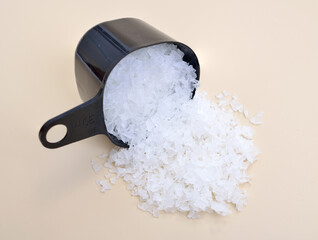
Ever wondered what keeps your cardboard boxes sealed shut or makes your wooden furniture stick together? The answer might surprise you—it’s often a special kind of glue called polyvinyl alcohol adhesive, or PVA for short.
PVA is a versatile water-based glue renowned for its strong bonding properties. Approximately 650,000 tons of it are produced annually on a global scale. It’s an adhesive that’s non-toxic, odorless, and dries clear. Plus, its relatively short drying time and the ability to make clean, professional-looking results further enhance its appeal in various industrial settings. (1)
Now, if you’re curious about how this versatile adhesive is used in manufacturing, keep reading.
1. Keeping Paper Products Together
One of the most common uses of PVA is in the paper and packaging industry. Think about the last book you read or the cardboard box your online shopping arrived in. Chances are, PVA played a role in keeping them together.
In bookbinding, PVA is the go-to adhesive for attaching book covers and binding pages. It creates a strong, flexible bond that can withstand the frequent opening and closing of books. For cardboard boxes and paper bags, PVA provides a reliable seal that keeps contents secure during shipping and storage.
But here’s the thing: polyvinyl alcohol adhesive is a natural powerhouse, yes, but it still pays to get it from reputable suppliers. This is to ensure it really enhances your products’ effectiveness and overall quality. These companies adopt a process creating PVA that does its job seamlessly.
2. Building Strong Furniture
If you’re an aficionado of do-it-yourself projects or even tried to assemble furniture at least once, there’s a very good chance you’ve used PVA without knowing it. It’s an active ingredient in many wood glues.
In a Fine Woodworking magazine survey, Type 1 PVA glue has 100% joint strength, or mechanical resistance, when used on wood. Meanwhile, the standard PVA glue only has 95%. (2)
Furniture makers love PVA because it seeps into wood fibers, creating a bond that’s both strong and long-lasting. So next time you sit on a wooden chair or lean on a table, remember that PVA might be the very thing holding it all together.
3. Making Fabrics Better
You might be surprised to learn that PVA also has a place in the textile industry. Not to stick fabrics together but to improve their quality.
There’s this process called “sizing” wherein PVA is applied to fabrics to boost their strength and even how they look. This treatment helps threads stay in place, reduces fraying, and can even make fabrics easier to print on. So, that crisp new shirt you just bought? It might owe some of its good looks to PVA!
4. Strengthening Buildings
Yes, for small projects, it serves well. But did you know that it also does its purpose in construction? When used in mixtures with concrete, PVA works wonders. It’s been known to enhance the workability of concrete, making the job easier for construction workers—the pouring and shaping.
But that’s not all; PVA also contributes to the reduction of water that might penetrate concrete. This is why we’ve got buildings more resistant to water, meaning they could last longer.
5. Creating Dissolvable Films
Here’s a cool use of PVA you might not have heard of—it can be made into thin, water-soluble films. These films have all sorts of applications in packaging. Imagine a packet of detergent that you can just toss into the washing machine, package and all. As the water dissolves the PVA film, the detergent is released. It’s convenient and reduces plastic waste!
6. Protecting Electronic Components
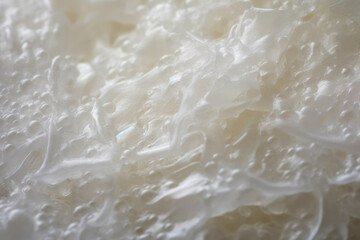
In electronics, the components have to be preserved from moisture and dust. PVA can be used for insulation purposes, giving fragile electronic parts some sort of protective layer. For example, it acts as the dielectric layer in the thin film transistors of today because of its insulating elements and resistance towards environmental conditions. (3)
This use of PVA helps extend the life of electronic devices by shielding them from environmental factors that could cause damage.
7. Improving Your Home’s Walls
Next time you’re painting a room in your house, take a look at the paint can. There’s a huge chance PVA is listed as one of the ingredients (especially true for interior paints).
PVA helps improve the paint’s ability to stick to walls and increases its durability. It also helps the paint dry to a smooth finish.
8. Healing Wounds
Believe it or not, PVA even has a place in the medical field. There are some medical adhesives and various kinds of wound dressings composed of this synthetic polymer that make it to the market. Since PVA is non-toxic and fairly absorbent, it can be used to keep wounds fresh and promote healing.
9. Supporting 3D Printing
PVA is also widely used as a support material for many complex objects printed with 3D printers. Why? It holds onto parts that are hard to print alone.
And the best thing is that after printing, you can then dissolve the PVA supports in water and be left with the perfect 3D-printed object. Imagine having a helpful assistant that disappears after it has done its job!
10. Shaping Ceramics
Last but not least, PVA finds use in the ceramics industry. It acts as a binder, holding ceramic particles together before they’re fired in a kiln. This makes it easier to shape ceramic objects and helps them maintain their form during the firing process.
Wrapping Up
PVA is a hidden champion in the world of manufacturing. From books to buildings, clothes to medical supplies, it’s a versatile adhesive that makes lives easier in countless ways. PVA’s strength, flexibility, and even solubility make it a valuable tool for countless industries. So, the next time you appreciate a well-bound book or a comfortable shirt, remember the unsung hero behind it: PVA.
Apart from that, if you are interested to know about “8 Ways Business Product Manufacturing is Changing in 2023” then visit our “Small Businesses” category.
References
- “Degradation of Polyvinyl Alcohol in US Wastewater Treatment Plants and Subsequent Nationwide Emission Estimate”, Source: https://www.ncbi.nlm.nih.gov/pmc/articles/PMC8199957/
- “Wood glue”, Source: https://en.wikipedia.org/wiki/Wood_glue
- “Environmentally friendly, flexible and high performance PVA dielectric layer fabricated by solution method and its application in IGZO-TFT”, Source: https://www.sciencedirect.com/science/article/abs/pii/S1566119921003177








 adhesive revolutionizes manufacturing across industries, from bookbinding to 3D printing.)